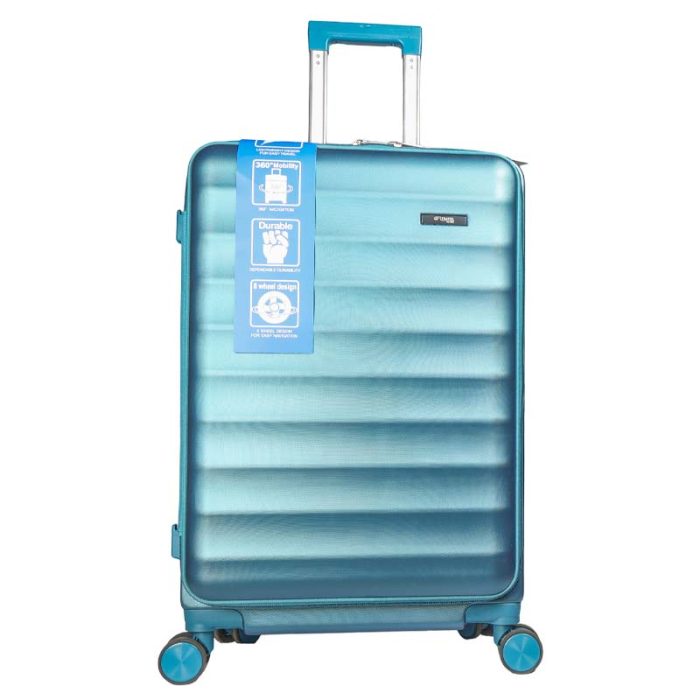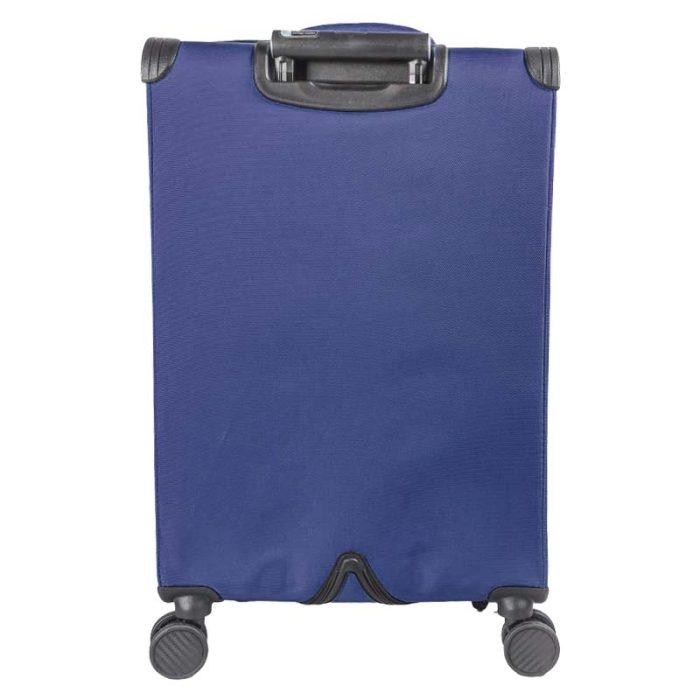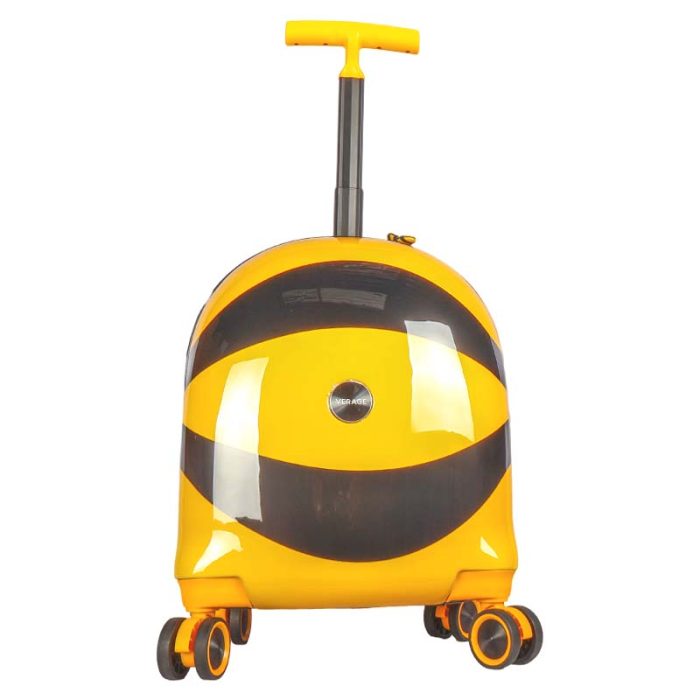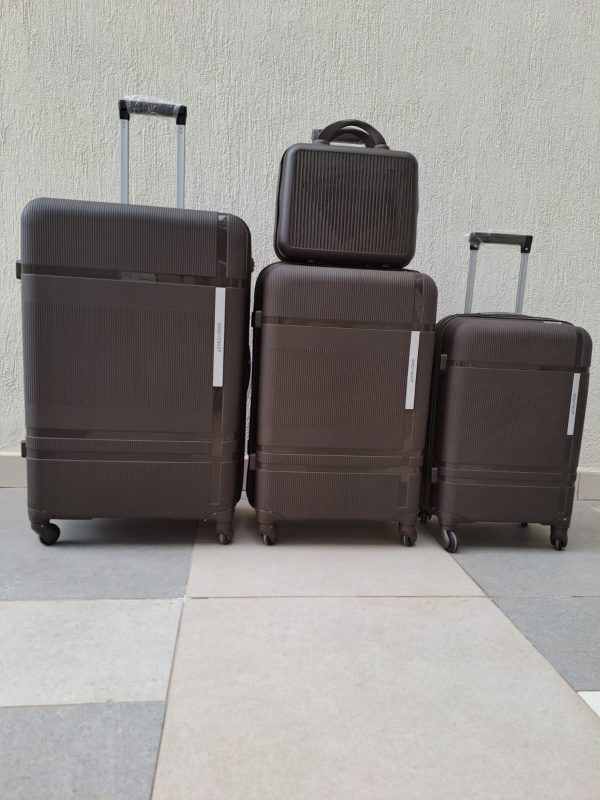
When shopping for luggage or checking airline baggage restrictions, you may come across measurements such as 85 LCM, 115 LCM or 158 LCM. These figures can be confusing if you are used to measuring suitcases by height, width and depth separately. Understanding the 85 lcm baggage meaning helps you interpret luggage specifications and choose a suitcase that suits your travel requirements.
LCM in baggage measurements commonly refers to linear centimetres. It describes the combined external dimensions of a suitcase by adding its height, width and depth. Therefore, the 85 lcm baggage meaning is not that a suitcase is 85 cm tall. It means that its three measurements add up to 85 centimetres.
Knowing how to calculate linear centimetres can help you compare suitcase sizes, understand airline baggage rules and avoid unexpected baggage problems at the airport.
What Does LCM Mean on Baggage?
LCM stands for linear centimetres in luggage measurement contexts. It is a way of expressing the combined external dimensions of a suitcase using one figure.
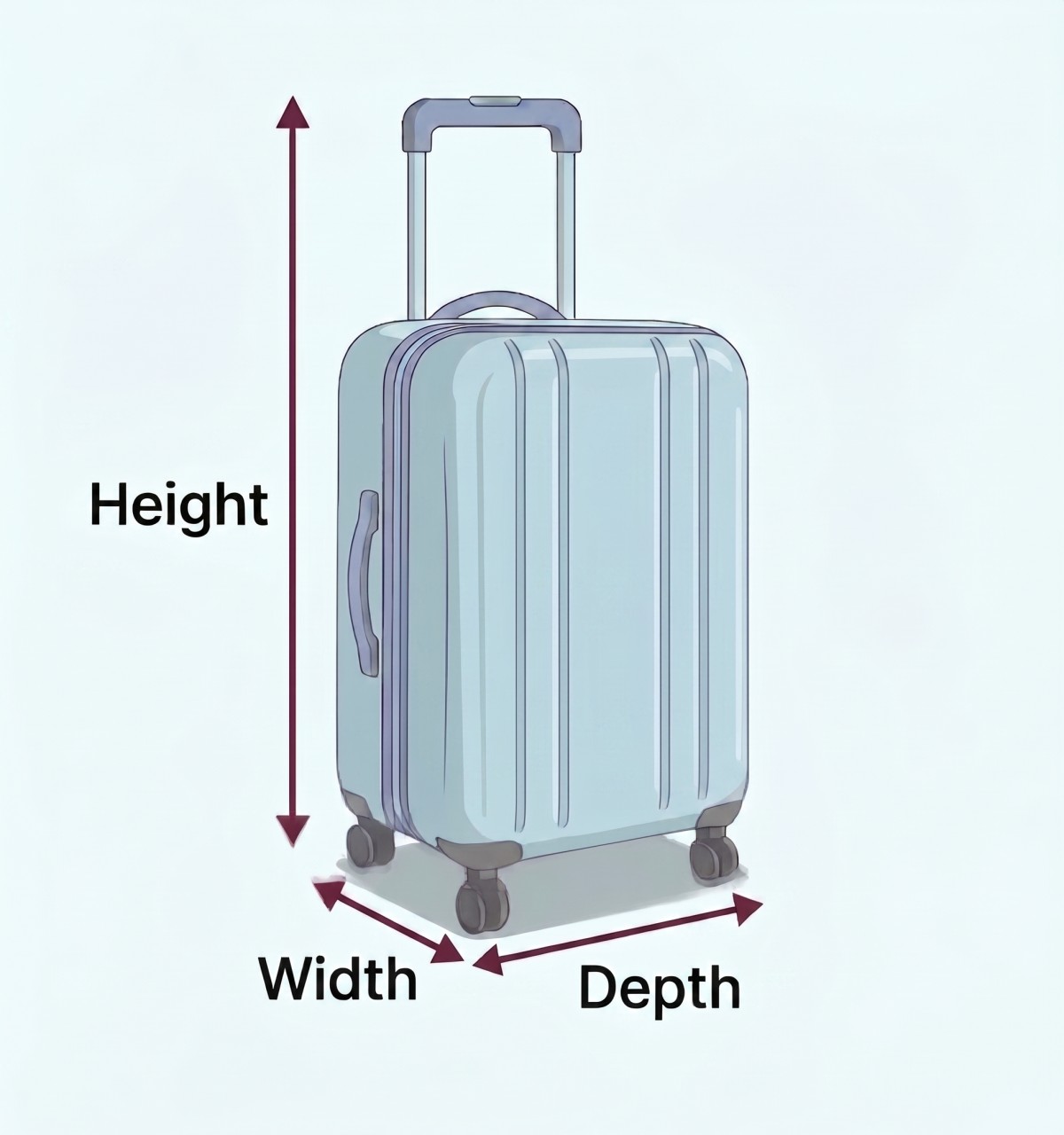
The calculation uses three measurements:
- Height: The measurement from the bottom to the top of the suitcase.
- Width: The measurement across the widest part.
- Depth: The measurement from the front to the back.
When these measurements are added together, the result is the total linear measurement.
For example, a suitcase measuring 50 cm high, 30 cm wide and 5 cm deep has a combined measurement of 85 cm.
This is the basic 85 lcm baggage meaning: the total of the three external dimensions, rather than the measurement of one side.
What Is the 85 LCM Baggage Meaning?
The 85 lcm baggage meaning refers to a bag whose height, width and depth add up to 85 linear centimetres.
Consider this example:
| Suitcase dimension | Measurement |
|---|---|
| Height | 50 cm |
| Width | 30 cm |
| Depth | 5 cm |
| Total | 85 cm |
Another suitcase measuring 45 cm high, 25 cm wide and 15 cm deep also has a total of 85 linear centimetres.
This shows why understanding the 85 lcm baggage meaning is important. Two suitcases can have the same total linear measurement while having different shapes and proportions.
The figure describes the outside dimensions, not the internal packing capacity, weight or number of items the suitcase can hold.
How to Calculate Linear Centimetres on a Suitcase
Calculating linear centimetres is simple. You need a measuring tape and the suitcase's external height, width and depth.
Measure the height
Stand the suitcase upright and measure from its lowest point to its highest point. Include wheels and fixed handles that extend beyond the main body.
Measure the width
Measure across the widest part of the suitcase from one side to the other.
Measure the depth
Measure from the front to the back at the deepest point. Include external pockets and other protruding sections.
Add the three measurements
Add the height, width and depth together to get the total linear measurement.
For example:
| Dimension | Measurement |
|---|---|
| Height | 55 cm |
| Width | 35 cm |
| Depth | 25 cm |
| Total linear measurement | 115 cm |
This example gives a total of 115 linear centimetres. The same calculation helps you understand the 85 lcm baggage meaning when comparing smaller suitcases.
85 LCM vs 115 LCM vs 158 LCM: Understanding the Differences
Different linear measurements indicate different overall suitcase sizes. A lower figure generally describes a more compact bag, while a higher figure describes a larger bag.
| Linear measurement | Meaning |
|---|---|
| 85 LCM | Height, width and depth add up to 85 cm |
| 115 LCM | Height, width and depth add up to 115 cm |
| 158 LCM | Height, width and depth add up to 158 cm |
The 85 lcm baggage meaning is useful when comparing compact luggage, while larger measurements may be relevant when choosing checked suitcases.
Some airlines use a combined dimension limit around 158 cm for certain checked baggage allowances. However, this is not a universal rule. Always check the airline's current baggage policy, including individual dimension and weight restrictions.
Does 85 LCM Mean Cabin Baggage?
No. The 85 lcm baggage meaning only describes the combined external dimensions of a bag. It does not automatically classify the suitcase as cabin baggage.
Airlines usually specify cabin baggage restrictions based on individual measurements and weight. A suitcase may have a combined measurement of 85 cm but still be too tall, wide or deep for a particular airline's cabin allowance.
Before choosing a cabin suitcase, check:
- Maximum permitted height.
- Maximum permitted width.
- Maximum permitted depth.
- Maximum cabin baggage weight.
- Whether wheels and handles are included.
- Whether your ticket includes cabin baggage.
Do not rely on the 85 lcm baggage meaning alone when deciding whether a suitcase can travel inside the aircraft cabin.
Linear Centimetres vs Regular Suitcase Measurements
Linear centimetres and regular suitcase dimensions describe the same physical bag in different ways.
Regular measurements show the height, width and depth separately. Linear centimetres combine those three figures into one total.
For example, a suitcase measuring 70 cm × 45 cm × 25 cm has a total linear measurement of 140 cm.
Understanding the 85 lcm baggage meaning makes it easier to interpret measurements expressed as a combined figure. However, when an airline provides individual maximum dimensions, you must check each side separately.
Both measurement methods are important when buying luggage and preparing for air travel.
How to Measure a Suitcase Correctly
Incorrect measurements can cause problems during check-in. Follow these steps when checking the size of your suitcase.
Measure the outside: Airlines assess external suitcase dimensions, not the internal space available for packing.
Include wheels and handles: Check the full height, including parts that extend beyond the main body.
Check external pockets: Soft-shell suitcases may have front compartments that increase their depth.
Measure expanded luggage: If your suitcase has an expansion zip, measure it when expanded if you intend to travel that way.
Use centimetres consistently: If your measuring tape uses inches, convert the measurements into centimetres before calculating the total.
These steps help you apply the 85 lcm baggage meaning accurately and avoid relying on product descriptions that may not include every external feature.
Common Mistakes When Reading Luggage Measurements
Travellers sometimes misunderstand luggage measurements and end up choosing bags that do not meet their airline's requirements.
Confusing LCM with litres
Linear centimetres measure external dimensions. Litres describe volume or packing capacity. They are not interchangeable.
Assuming 85 LCM means 85 cm tall
The 85 lcm baggage meaning refers to the combined height, width and depth, not one individual measurement.
Ignoring the wheels
Wheels can add to the suitcase's total external height. Include them when checking dimensions.
Checking only the combined measurement
A suitcase may meet a total linear limit but exceed the maximum permitted height, width or depth.
Assuming all airlines have the same baggage limits
Airline policies vary depending on the carrier, route and ticket conditions. Always verify the applicable rules before departure.
Forgetting the weight restriction
A suitcase may meet the size requirement but exceed the permitted baggage weight. Check both measurements and weight.
How to Choose a Suitcase Based on Linear Measurements
Understanding the 85 lcm baggage meaning is useful, but it should not be the only factor when choosing luggage. Consider your travel duration, packing habits and the airlines you normally use.
Consider the length of your trip
A compact suitcase may be sufficient for a short weekend trip, while a medium or large suitcase may be more suitable for an extended holiday.
Check airline baggage requirements
Compare the suitcase dimensions with the airline's current rules. If you regularly travel with different carriers, consider choosing a suitcase that meets the more restrictive requirements of your usual routes.
Compare the external dimensions
Look at the height, width and depth rather than relying only on a combined LCM figure.
Consider the suitcase material
Hard-shell suitcases provide a rigid exterior, while soft-shell models offer flexible fabric construction and often include external pockets.
Check the wheel design
Spinner suitcases have multi-directional wheels that make movement easier on smooth surfaces. Two-wheel suitcases are tilted and pulled behind the traveller.
Leave room for measurement differences
If a suitcase is very close to an airline's maximum dimensions, small differences in measurement can matter. Choosing a slightly smaller model may offer more flexibility.
Frequently Asked Questions About 85 LCM Baggage Meaning
What does 85 LCM mean on a suitcase?
The 85 lcm baggage meaning is that the suitcase's external height, width and depth add up to 85 linear centimetres. It does not mean that the suitcase is 85 cm tall.
How do you calculate 85 linear centimetres?
Add the external height, width and depth. For example, 50 cm + 30 cm + 5 cm = 85 linear centimetres.
Is 85 LCM the same as 85 cm?
They both use centimetres, but they do not describe the same thing. The 85 lcm baggage meaning refers to the combined total of three dimensions, while 85 cm on its own may refer to one side of a suitcase.
Is an 85 LCM suitcase suitable for cabin baggage?
It depends on the airline. Check the maximum permitted cabin baggage height, width, depth and weight. A total of 85 LCM does not guarantee that the suitcase will be accepted in the cabin.
What does 158 LCM mean for baggage?
It means the combined height, width and depth total 158 linear centimetres. Some airlines use a combined dimension limit around this figure for checked luggage, but you must confirm the current rules for your flight.
Do suitcase wheels count when measuring LCM?
Measure the full external dimensions, including wheels and handles that extend beyond the suitcase body. Check the airline's measurement instructions for specific requirements.
Is LCM the same as suitcase capacity in litres?
No. LCM measures combined external dimensions in centimetres, while litres describe the suitcase's capacity or volume.
Can an expandable suitcase have a different LCM measurement?
Yes. Opening the expansion section increases the suitcase's depth and may increase its total linear measurement. Measure it in the condition in which you intend to travel.
Where can I check whether my suitcase meets airline size limits?
Check the airline's official baggage policy for your route and ticket type. Compare the permitted dimensions with your suitcase's full external measurements.
Choose the Right Suitcase Before Your Next Flight
Understanding the 85 lcm baggage meaning helps you compare luggage sizes and interpret baggage measurements more confidently. Remember that linear centimetres refer to the combined height, width and depth of a bag, not its weight or internal capacity.
Before purchasing a suitcase, compare its full external dimensions with the airline's current baggage requirements. Explore the available luggage at The Trendy Suitcase and choose a design that suits your packing needs and travel plans.