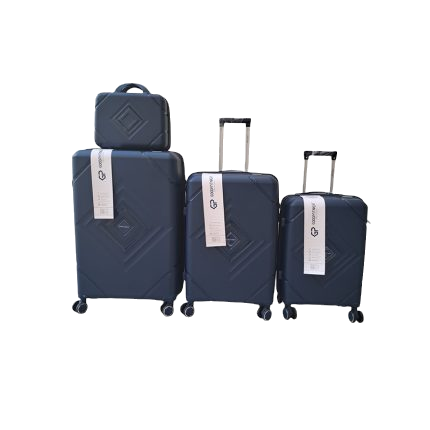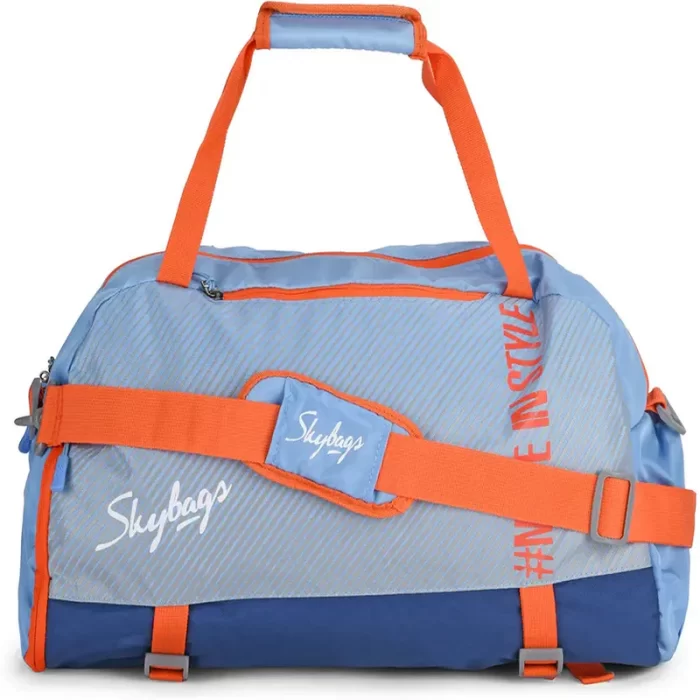

Buying luggage can become confusing when different suitcases are described using litres, centimetres, inches and kilograms.
One suitcase might be advertised as 65 litres, another as 70 cm, while an airline may tell you that your checked bag must not exceed 23 kg. These measurements describe different things, so comparing them directly can lead to mistakes.
Understanding luggage capacity litres is particularly useful when choosing a suitcase for international flights, student travel, family holidays or business trips. Litres tell you approximately how much space is available inside the luggage, centimetres describe its physical dimensions, while kilograms describe weight.
These measurements work together.
A large suitcase may have substantial luggage capacity litres, but that does not mean you can fill all the available space without exceeding your airline's weight allowance.
Likewise, a suitcase that fits comfortably within a particular airline's dimensions may still become too heavy when packed.
For Kenyan travellers shopping for luggage, the solution is to understand how these measurements relate to one another.
This comprehensive luggage size guide Kenya explains litres, centimetres and kilograms, provides practical reference tables, explains cabin and checked luggage measurements, and shows how to choose the right suitcase size for your trip.
What Does Luggage Capacity in Litres Actually Mean?
Luggage capacity in litres refers approximately to the amount of three-dimensional space available inside a suitcase or bag. It is a useful way of comparing how much you can potentially pack.
Think of litres as the suitcase's internal volume.
For example:
- A 20-litre backpack has relatively limited packing space.
- A 40-litre travel bag offers considerably more room.
- A 70-litre suitcase provides much more capacity for clothing and other belongings.
- A 100-litre suitcase is designed for substantial packing.
One litre is equal to 1,000 cubic centimetres.
Therefore:
1 litre = 1,000 cm³
This is why dimensions can theoretically be converted into litres.
For a rectangular space, the calculation is:
Length × Width × Height ÷ 1,000 = approximate litres
For example:
60 cm × 40 cm × 25 cm = 60,000 cm³
60,000 ÷ 1,000 = 60 litres
However, a suitcase is not a perfect rectangular box.
Wheels, handles, curved corners, dividers and internal structures take up space.
Therefore, external dimensions should not be treated as an exact measurement of internal capacity.
Luggage Capacity Litres vs External Dimensions
Luggage capacity litres and external dimensions describe different characteristics of a suitcase, so you should not use one as a direct substitute for the other.
A suitcase can have external dimensions of approximately:
70 × 45 × 28 cm
but its actual usable internal capacity will depend on:
- Shell thickness.
- Internal frame.
- Wheel housing.
- Handle mechanism.
- Lining.
- Compartments.
- Compression system.
- Shape of the case.
Two suitcases with almost identical external dimensions can therefore provide different usable packing space.
This is one reason manufacturers sometimes provide both:
Dimensions: 70 cm
and
Capacity: approximately 80 litres
The dimensions tell you about the physical size.
The litres tell you approximately how much you can pack.
Suitcase Size Chart CM: Common Luggage Categories
A suitcase size chart in cm provides a practical way to compare luggage sizes, but measurements can vary by manufacturer and should always be checked against the airline's current rules.
Here is a useful general reference:
| Luggage Category | Approx. Height | Approx. Capacity | Typical Use |
|---|---|---|---|
| Personal item | 30–45 cm | 10–20 L | Essentials |
| Small cabin bag | 45–55 cm | 20–40 L | Short trips |
| Medium suitcase | 60–68 cm | 50–75 L | 4–7 days |
| Large suitcase | 69–78 cm | 75–100 L | 1–2 weeks |
| Extra-large suitcase | 79 cm+ | 100 L+ | Extended travel |
These figures are guidelines rather than universal standards.
A "large" suitcase from one manufacturer may have different dimensions from another manufacturer's large suitcase.
Therefore, when shopping, look at the actual dimensions rather than relying exclusively on labels such as:
- Cabin.
- Small.
- Medium.
- Large.
- Extra large.
This is particularly important for air travel.
Cabin Bag Dimensions: Why Centimetres Matter
Cabin bag dimensions are usually more important than litre capacity when determining whether a suitcase can be taken into an aircraft cabin.
Airlines generally specify maximum external dimensions.
For example, an airline may specify a maximum cabin bag size using measurements such as:
55 × 40 × 20 cm
The airline is concerned about the physical size of the bag.
It is not simply asking whether the bag has 35 litres of capacity.
A 35-litre bag can have different dimensions depending on its shape.
Therefore, when buying cabin luggage, check:
- Height.
- Width.
- Depth.
- Weight.
- Wheel and handle dimensions.
Some airlines include wheels and handles when measuring luggage.
Others may have specific requirements.
Always check the current baggage policy of the airline you are travelling with.
Luggage Capacity Litres: How Much Can You Actually Pack?
Luggage capacity litres gives you an approximate idea of how much clothing and personal equipment can fit, but actual packing capacity depends on what you carry and how efficiently you pack.
Consider three travellers.
Traveller A: Business Trip
A business traveller carrying:
- Two shirts.
- Two trousers.
- One jacket.
- Shoes.
- Toiletries.
- Laptop.
- Documents.
may need considerably less space than a holidaymaker travelling for two weeks.
Traveller B: Beach Holiday
Someone travelling with:
- Multiple outfits.
- Swimwear.
- Sandals.
- Beachwear.
- Toiletries.
may need more capacity.
Traveller C: Student Relocating Abroad
A student moving from Kenya to university overseas may need:
- Clothes.
- Shoes.
- Books.
- Bedding.
- Electronics.
- Personal items.
Their capacity requirement may be much higher.
This demonstrates why there is no universal "best" suitcase size.
Luggage Size Guide Kenya: Which Suitcase Size Should You Choose?
A practical luggage size guide Kenya should match suitcase capacity to the length and purpose of your trip rather than simply recommending the largest available bag.
Use this as a starting point:
| Trip Type | Suggested Capacity | Typical Suitcase |
|---|---|---|
| Overnight | 15–30 L | Backpack/small bag |
| 2–3 days | 25–45 L | Cabin bag |
| 4–7 days | 50–75 L | Medium suitcase |
| 7–14 days | 75–100 L | Large suitcase |
| 2+ weeks | 90–120+ L | Large/extra-large |
| Relocation | 100 L+ | Multiple checked bags |
These are approximate.
Your clothing, climate, footwear and packing habits can significantly change the amount of space you need.
Someone travelling to a warm destination may pack fewer bulky clothes than someone travelling somewhere cold.
Luggage Capacity Litres and Kilograms Are Not the Same
Luggage capacity litres measures space, while kilograms measure weight, so a suitcase can have plenty of available space but still exceed an airline's weight limit.
This distinction is extremely important.
Imagine you have a suitcase with:
90 litres of capacity
You might be able to physically fit a large quantity of clothing inside.
But if your airline allowance is:
23 kg
you cannot simply keep packing until the suitcase is full.
The maximum weight remains 23 kg.
This is why travellers should think about both:
Space
and
Weight
when packing.
How Many Litres Is a 23 KG Suitcase?
There is no exact litre equivalent for a 23 kg suitcase because kilograms measure weight while litres measure volume, and different belongings have different densities.
This is one of the most common luggage misconceptions.
You cannot say:
23 kg = exactly 80 litres.
Instead, 23 kg refers to the maximum weight of the packed suitcase.
The actual volume needed to reach 23 kg depends on what you pack.
For example:
A suitcase full of winter coats may reach its physical capacity before becoming extremely heavy.
A suitcase filled with books may become very heavy while still having unused space.
Shoes, electronics, toiletries and other dense items can also increase weight quickly.
Therefore, luggage capacity litres should never be used as a replacement for an airline's kilogram allowance.
Luggage Capacity Litres: Approximate Packing Reference
The following luggage capacity litres table can help you estimate the amount of packing space different suitcase sizes provide, but actual capacity varies by model.
| Approx. Capacity | Typical Size | Practical Use |
|---|---|---|
| 20 L | Small bag | Essentials |
| 30 L | Cabin/travel bag | Weekend |
| 40 L | Large cabin-style bag | 2–4 days |
| 50 L | Compact suitcase | 3–5 days |
| 60 L | Medium suitcase | 4–7 days |
| 70 L | Medium-large | 5–9 days |
| 80 L | Large suitcase | 7–12 days |
| 90 L | Large suitcase | 1–2 weeks |
| 100 L | Extra-large | Extended travel |
| 120 L+ | Very large | Relocation/long stays |
These are estimates rather than industry-standard categories.
Always check the specific product.
Suitcase Size Chart CM: Understanding Small, Medium and Large
A suitcase size chart in cm is more useful when you treat small, medium and large as approximate categories rather than fixed international standards.
Small Suitcases
Usually around:
45–55 cm
Often suitable for:
- Cabin travel.
- Weekend trips.
- Short business journeys.
Medium Suitcases
Often around:
60–68 cm
Suitable for:
- Several days of travel.
- One-week holidays.
- Moderate packing.
Large Suitcases
Often around:
69–78 cm
Suitable for:
- Longer holidays.
- Family travel.
- Travellers carrying more clothing.
Extra-Large Suitcases
Often:
79 cm or more
Suitable for:
- Extended stays.
- Relocation.
- Travellers with high packing requirements.
However, extra-large luggage needs special attention because it can become very heavy.
Cabin Bag Dimensions: The Three Measurements You Must Know
Cabin bag dimensions are normally expressed using three measurements: height, width and depth, and all three can affect whether a bag meets an airline's requirements.
For example:
55 × 40 × 20 cm
means:
- Height: 55 cm.
- Width: 40 cm.
- Depth: 20 cm.
Do not only check the height.
A bag measuring 55 cm tall may still exceed the airline's allowance if it is too wide or too deep.
Also check whether the airline's stated dimensions include:
- Wheels.
- Handles.
- External pockets.
This is why a cabin bag dimensions check should happen before purchasing a trolley intended for cabin use.
Luggage Size Guide Kenya: Domestic vs International Travel
A luggage size guide Kenya should account for the fact that baggage rules vary between airlines and routes, meaning a suitcase suitable for one journey may not be suitable for another.
For example, a traveller taking a domestic flight may have different baggage requirements from someone travelling internationally.
Regional airlines can also use different aircraft and baggage policies.
Before travelling, check:
- Airline.
- Route.
- Fare class.
- Cabin allowance.
- Checked allowance.
- Number of permitted pieces.
- Maximum dimensions.
- Maximum weight.
Do not assume that because a suitcase worked on one flight, it will automatically meet another airline's requirements.
Luggage Capacity Litres: Hard-Shell vs Soft-Shell Suitcases
Hard-shell and soft-shell luggage can provide similar overall capacity, but their internal layouts and usable space may differ.
Hard-shell luggage often provides:
- Structured compartments.
- A protective exterior.
- Consistent shape.
- Split-case designs.
Soft-shell luggage may provide:
- External pockets.
- Flexible expansion.
- Easier access to certain items.
- A little more flexibility when packing.
The best choice depends on your travel needs.
If you frequently carry fragile belongings, a structured hard-shell case may appeal to you.
If you need external pockets for documents and small items, soft-shell luggage may be more practical.
Luggage Capacity Litres: Why Expandable Bags Can Be Useful
Expandable luggage can provide additional packing space, but using the expansion feature may increase the suitcase's dimensions and potentially affect airline compliance.
For example, a suitcase may have:
65 L standard capacity
and:
75 L expanded capacity
That extra space can be useful on the return journey when you have purchased items during your trip.
However, expansion can make the suitcase deeper.
This means you should check the expanded dimensions before travelling.
Never assume that an expanded suitcase will automatically remain within your airline's maximum dimensions.
Suitcase Size Chart CM: Wheels and Handles Matter
When using a suitcase size chart cm, remember that airline measurements may include wheels and handles, not simply the fabric or shell itself.
A suitcase body might measure:
68 cm
but the total external height may be:
72 cm
once the wheels and handle housing are included.
This difference can matter for cabin luggage in particular.
When shopping, look for a manufacturer's stated external dimensions.
If you are uncertain, measure the suitcase from its furthest external points.
Luggage Capacity Litres: Internal vs External Capacity
The advertised luggage capacity litres can differ from the volume you calculate using external dimensions because suitcase walls and internal components occupy space.
Suppose the external measurements are:
70 × 45 × 28 cm
The simple mathematical calculation gives:
70 × 45 × 28 ÷ 1,000
= 88.2 litres
But the suitcase may be advertised at a lower capacity.
Why?
Because the actual internal cavity is smaller.
Space is occupied by:
- Shell thickness.
- Lining.
- Wheels.
- Handle components.
- Frames.
- Compartments.
- Corners.
Therefore, manufacturer-stated capacity can be more useful than simply calculating external volume.
Luggage Capacity Litres: Packing Cubes and Compression
Packing cubes can help travellers use luggage capacity litres more efficiently by organising clothing and reducing wasted space.
They can help separate:
- Shirts.
- Trousers.
- Underwear.
- Accessories.
- Children's clothing.
Compression packing cubes can reduce the volume of some soft items.
However, compression does not make heavy items lighter.
If you compress clothing into a smaller space, you still have approximately the same weight.
This brings us back to the difference between:
Capacity = space
and
Weight = kilograms
Both matter.
Suitcase Size Chart CM for Students Travelling Abroad
Students travelling abroad often benefit from medium and large suitcases, but the best suitcase size depends on airline allowance, destination climate and how much the student needs to carry.
A student travelling from Kenya to the UK, US or Canada may be packing for an extended stay.
Possible luggage might include:
- One or two large checked suitcases.
- A cabin trolley.
- A backpack.
But the student should first check the airline's exact allowance.
Packing the maximum possible capacity into every bag is not always the best strategy.
Instead, organise belongings according to:
- Weight.
- Frequency of use.
- Fragility.
- Security.
- Accessibility.
Keep important documents, medication where applicable, electronics and essential valuables in appropriate cabin baggage according to airline rules.
Cabin Bag Dimensions: What Should Go in the Cabin?
A cabin bag should contain items you may need during the journey or cannot afford to lose from checked luggage.
Depending on your circumstances, this may include:
- Travel documents.
- Wallet.
- Phone.
- Chargers.
- Essential electronics.
- A change of clothing.
- Important personal items.
Always follow airline security restrictions.
Liquids, batteries and other restricted items may have specific requirements.
The cabin bag is not simply a smaller version of your checked suitcase.
It serves a different purpose.
Luggage Capacity Litres: What Should Go in Checked Luggage?
Checked luggage is generally where travellers place the majority of clothing and non-essential travel items that are permitted in the aircraft hold.
Depending on the trip, this can include:
- Clothing.
- Shoes.
- Toiletries permitted in checked baggage.
- Non-fragile personal belongings.
- Larger travel accessories.
But avoid placing valuables or essential travel documents in checked luggage.
Always check the airline's prohibited and restricted-items rules.
Luggage Size Guide Kenya: How to Choose the Right Size
The best luggage size guide Kenya is one that starts with your airline allowance and trip requirements rather than starting with the biggest suitcase available.
Follow this process.
Step 1: Check the airline
Find the current baggage allowance.
Step 2: Check dimensions
Confirm the maximum external measurements.
Step 3: Check weight
Know whether your allowance is:
- 7 kg.
- 10 kg.
- 20 kg.
- 23 kg.
- 30 kg.
- Another amount.
Step 4: Estimate your packing
Think about how much clothing and equipment you need.
Step 5: Select capacity
Choose a suitcase that provides enough space without encouraging unnecessary packing.
Step 6: Check empty weight
A lighter suitcase leaves more allowance for belongings.
Luggage Capacity Litres: Don't Automatically Buy the Largest Suitcase
More luggage capacity litres does not always mean better luggage because a larger suitcase can encourage overpacking and may become difficult to keep within airline weight limits.
A 100-litre suitcase sounds attractive.
But if your airline gives you a 23 kg allowance, filling that suitcase with dense belongings can quickly push you over the limit.
Large luggage can also be:
- Difficult to manoeuvre.
- Heavy when full.
- Awkward in taxis.
- Harder to store.
- More difficult to lift.
Choose the capacity you actually need.
Suitcase Size Chart CM: Quick Reference for Kenyan Travellers
Use this suitcase size chart cm as a starting reference when choosing luggage, then confirm the actual dimensions and airline requirements for your journey.
| Category | Approx. Height | Approx. Litres | Typical Travel |
|---|---|---|---|
| Personal item | 30–45 cm | 10–20 L | Essentials |
| Cabin | 45–55 cm | 20–40 L | 1–4 days |
| Small checked | 55–62 cm | 40–60 L | Short holiday |
| Medium | 60–68 cm | 50–75 L | 4–7 days |
| Large | 69–78 cm | 75–100 L | 1–2 weeks |
| Extra large | 79 cm+ | 100–120+ L | Extended stays |
Again, these are approximate categories.
Always check the exact product specifications.
Luggage Capacity Litres: Why Capacity Varies by Brand
Luggage capacity litres can vary between brands even when suitcases appear to have similar external dimensions because manufacturers use different internal designs.
One suitcase may use:
- Thick structural components.
- Large wheel housings.
- Fixed dividers.
Another may use:
- Thin shell construction.
- Minimal internal framing.
- A more open interior.
The second suitcase could offer more usable space despite similar external measurements.
This is why comparing capacity numbers can be useful when choosing between products.
Cabin Bag Dimensions: Don't Forget Personal Items
Cabin bag dimensions are not necessarily the same as the allowance for a personal item such as a handbag, small backpack or laptop bag.
Airlines can distinguish between:
- Cabin trolley.
- Personal item.
- Handbag.
- Laptop bag.
The rules vary.
A traveller should therefore check the airline's current policy rather than assuming that a cabin trolley and backpack are always treated separately.
This is especially important when flying on restrictive fares.
Luggage Capacity Litres: How Clothing Type Changes Your Packing
The amount you can pack into a given luggage capacity litres depends significantly on the size and density of your belongings.
Summer clothing generally occupies less space than:
- Heavy jackets.
- Sweaters.
- Boots.
- Thick trousers.
A traveller going to a cold destination may therefore need more capacity even for a shorter trip.
For Kenyan travellers moving between climates, this difference can be significant.
Packing cubes can help organise the available space, but they cannot eliminate the physical volume of bulky clothing.
Luggage Size Guide Kenya: A Practical Buying Formula
A simple luggage size guide Kenya formula is to choose capacity according to trip duration, then confirm dimensions and weight against the airline before purchasing.
As a starting point:
1–3 days: 20–40 litres
4–7 days: 50–75 litres
7–14 days: 75–100 litres
2+ weeks: 90–120+ litres
Relocation: Multiple large bags may be more practical than one enormous suitcase.
These are not airline rules.
They are packing guidelines.
Luggage Capacity Litres: Where to Find Suitable Luggage
The Trendy Suitcase offers a range of luggage options for Kenyan travellers.
You can explore the luggage collection when you need larger travel cases.
For travellers looking specifically for wheeled luggage, browse the trolley bag collection.
If you prefer a backpack for cabin travel, commuting or shorter journeys, explore the backpacks collection.
For flexible travel bags and short trips, you can also browse the duffle bag collection.
You can also shop The Trendy Suitcase online.
Why Choose The Trendy Suitcase for Your Luggage?
The Trendy Suitcase helps Kenyan travellers choose from premium luggage, trolleys, backpacks and travel bags for different journeys and packing requirements.
The physical store is located at:
Our Mall, Magadi Road, Karen, Nairobi, Kenya.
Visiting a physical store can be particularly helpful when you are uncertain about suitcase size.
You can compare:
- Different dimensions.
- Different capacities.
- Wheel systems.
- Handle designs.
- Interior layouts.
- Materials.
- Colours.
- Brands.
You can also learn more about The Trendy Suitcase.
For personalised assistance, contact the team.
Countrywide deliveries are available, including Nairobi, Nakuru, Kisumu, Mombasa, Eldoret and other major towns across Kenya.
Same-day delivery is available within Nairobi, with next-day delivery to other parts of the country subject to applicable arrangements.
Frequently Asked Questions About Luggage Capacity Litres
What does luggage capacity litres mean?
Luggage capacity litres refers approximately to the amount of internal volume available inside a suitcase or bag.
Is 60 litres enough for a week?
For many travellers, around 60 litres can be suitable for a week, but this depends on clothing type, footwear, destination and packing habits.
How many litres is a cabin suitcase?
Cabin suitcases commonly fall somewhere around 20–40 litres, but capacity varies considerably by model and dimensions.
Is 80 litres a large suitcase?
An 80-litre suitcase would generally fall into the large or medium-large category, depending on its physical dimensions and manufacturer classification.
Does 23 kg equal a certain number of litres?
No. Kilograms measure weight while litres measure volume. There is no universal litre equivalent for 23 kg.
What is the most important cabin bag measurement?
Check all three external dimensions: height, width and depth. Also check the airline's maximum weight and whether wheels and handles are included.
Are suitcase dimensions measured including wheels?
Airline and manufacturer measurement practices can differ. Check the specific airline and product specifications to determine what is included.
Is a bigger suitcase always better?
No. A larger suitcase provides more space but can encourage overpacking and make it easier to exceed your airline's weight allowance.
Final Thoughts: Understanding Luggage Capacity Litres, CM and KG
Understanding luggage capacity litres, centimetres and kilograms makes it much easier to choose a suitcase that fits both your packing needs and your airline allowance.
Remember the basic difference:
Litres = space
Centimetres = physical dimensions
Kilograms = weight
These measurements work together but are not interchangeable.
When shopping, use luggage capacity litres to estimate how much you can pack.
Use a suitcase size chart cm to understand the physical dimensions.
Use cabin bag dimensions to check whether a suitcase is likely to meet your airline's cabin requirements.
And always use your airline's stated kilogram allowance to determine how heavy your packed luggage can be.
For Kenyan travellers, a good luggage size guide Kenya should therefore start with the airline, destination and length of the journey before selecting the suitcase.
If you are looking for your next travel case, explore The Trendy Suitcase's luggage collection, compare trolley bags, or choose from practical backpacks and duffle bags.
You can shop online, visit the store at Our Mall, Magadi Road, Karen, or contact The Trendy Suitcase for help selecting the right luggage size.
The goal is not simply to buy the biggest suitcase.
The goal is to buy the right capacity, the right dimensions and the right weight for the journey ahead.